
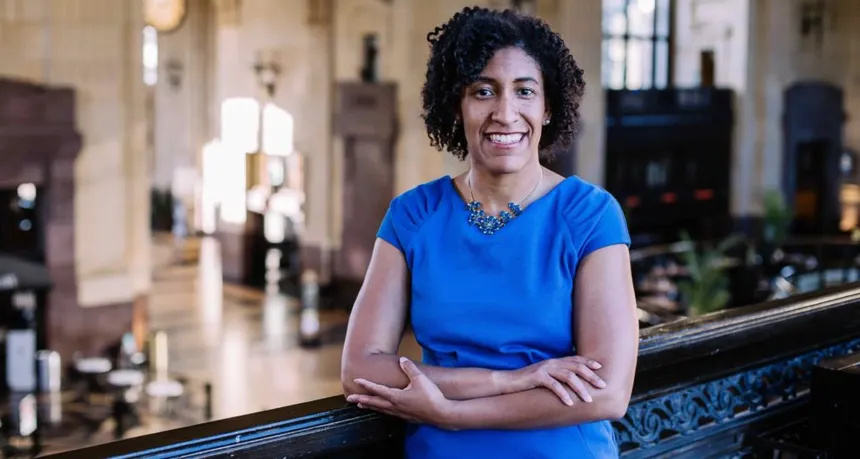
When Kristen Jeffers was in planning school, she learned something she could not unlearn: the people deciding how cities grow, where the transit runs, where the trees get planted, where housing gets built and who it’s built for, were overwhelmingly white, overwhelmingly male, and overwhelmingly comfortable. The residents most affected by planning decisions were the least represented in the rooms where those decisions were made. The residents least represented were, predictably, the ones the decisions kept failing.
Jeffers didn’t petition for a seat at the table. She built her own platform.
The Black Urbanist launched with no institutional backing, no grant funding, no editorial board. It began as a blog and grew into a multimedia platform centered in what Jeffers named Black Queer Feminist urbanism: a framework that insists the measure of any city’s design is not its skyline or its GDP per capita, but whether its most vulnerable residents can actually live in it. Transit riders. Renters. Disabled people. Queer people. People priced out of the neighborhoods their labor built.
The frame is useful precisely because it names what conventional planning discourse leaves unnamed. Zoning laws that restrict affordable housing in high-opportunity neighborhoods are not neutral technical decisions. They are policy choices with predictable racial outcomes. Transit cuts that disproportionately harm low-income riders are not budget necessities. They are choices about whose time and mobility the system values. Gentrification displacement is not a side effect of development. It is often the goal. Jeffers names these mechanisms directly and refuses to let the passive voice of planning bureaucracy obscure what is being decided and by whom.
Her reach extends well beyond the policy community. Bloomberg CityLab and NPR have cited her work as a leading voice on urban equity and transit justice. She has built the kind of independent platform that influences the field without depending on the field’s permission to exist.
The relay she carries from Floyd McKissick is not incidental. McKissick proved that economic power is infrastructure: that freedom requires a material foundation of land, water, and capital, not just rights on paper. Soul City was built with that understanding. Jeffers is asking the next question: once you’ve built it, who is it actually serving? Who gets to move through it freely, and who gets displaced, priced out, or left off the transit map? A city built for Black economic power that gentrifies its original Black residents isn’t liberation. It’s the same mechanism with different branding.
That is the question Jeffers keeps returning to: a city that fails its most vulnerable people is not a qualified success. It is a design flaw. Not a tragedy. A design flaw, which means it was designed, which means it can be redesigned.
Floyd McKissick built a city to prove economic power is real. Kristen Jeffers is asking who that power is serving. The relay holds.