

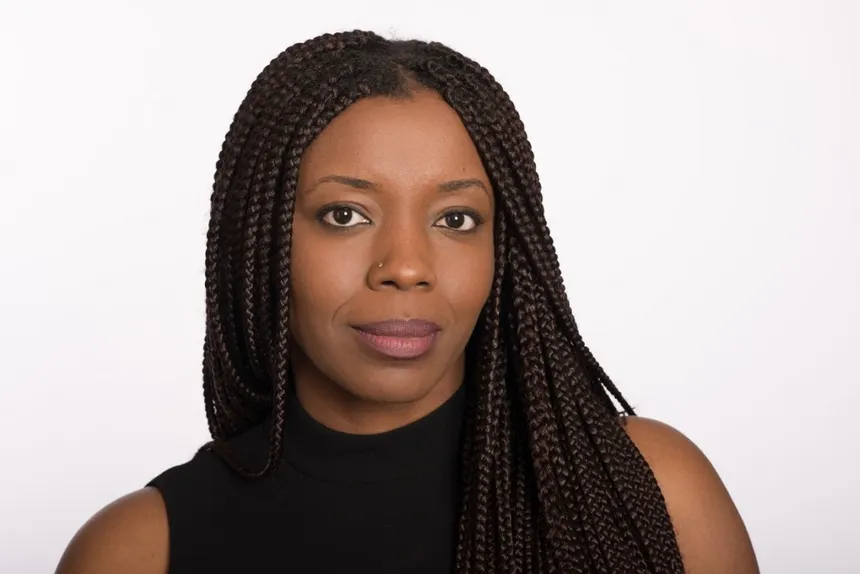
In 2009, Mariam Kamara was a successful computer engineer with a master’s degree from New York University and seven years of industry experience. She was, by every conventional measure, exactly where a person was supposed to be.
She walked away from all of it.
The reason was not burnout or failure. The reason was a question she could not stop asking: why were African cities being built with imported concrete? She watched construction happening across the continent and saw something that looked less like development and more like erasure. The materials didn’t fit the climate. The designs didn’t hold the culture. The buildings that went up trapped heat, required imported maintenance, and looked like they belonged somewhere else entirely.
Kamara went back to school. She earned her Master of Architecture from the University of Washington, studying what building actually meant in the places she came from, on the terms those places demanded. Then she returned to Niger and founded Atelier Masomi, her architectural practice.
Her most celebrated project is the Hikma Complex, built in the village of Dandaji. The site had a crumbling mosque the community wanted to restore. Rather than demolish and rebuild, Kamara worked with what existed: compressed earth bricks that regulate temperature naturally, made from local soil, requiring no imported supply chain to maintain. The mosque was restored and expanded into a complex that includes a secular community library, designed specifically for women and young people who had historically been excluded from the village’s public gathering spaces.
The Hikma Complex doesn’t just work. It breathes. The earth bricks absorb heat during the day and release it slowly at night, creating a natural cooling cycle that imported concrete cannot replicate. The carbon footprint is minimal. The building belongs to the land it came from.
Kamara’s central argument, made through her work as much as her words, is that the sustainable future African communities need is not some new technology imported from elsewhere. It is already in the soil. The knowledge of how to build with what you have, for the climate you live in, honoring the spatial logic of the culture you come from: that knowledge predates the colonial interruption. Recovering it is not a romantic project. It is an engineering decision.
Paul Revere Williams bent the Western architectural system until it had to acknowledge him. Kamara asked a different question: what if we don’t need the Western system at all? If the tools, the materials, and the knowledge were always here, why import the problem along with the solution?
The relay didn’t end with Williams. It evolved. Architecture that centers the people it’s built for, built from what the land already offers, designed for the climate that actually exists: that is not a niche philosophy. It is the only approach that holds.