

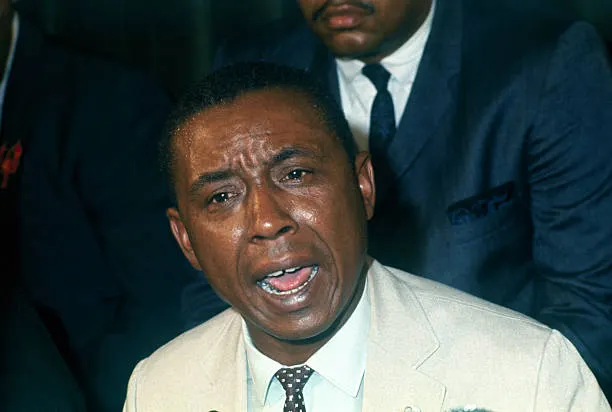
In 1969, Floyd McKissick did something almost no one had attempted in American history: he decided to build a city.
Not from a position of political capital or inherited wealth. McKissick was a civil rights attorney from North Carolina — a former CORE national director who had come to believe that integration, while necessary, was insufficient. The vote was a floor, not a ceiling. Seats at someone else’s table did not build the table. What Black America needed, McKissick argued, was ownership. Land. Economic infrastructure. The kind of structural self-determination that could not be legislated away.
He found his ground in Warren County, North Carolina — a 5,000-acre former slave plantation in one of the poorest counties in America. The same land that had once been worked by enslaved people under compulsion would become the foundation of a city built by and for Black Americans. The symbolism was deliberate. McKissick named it Soul City.
The plan was legitimate and ambitious. McKissick secured a $14 million federal loan guarantee under HUD’s New Communities Act — the first such guarantee ever awarded to a Black-led development project. He incorporated in 1969, attracting bipartisan support from the Nixon administration, which saw Black capitalism as an alternative to urban unrest. He hired architects, planners, and engineers. By the mid-1970s, Soul City had Soultech I — a state-of-the-art industrial facility — and had laid clean water pipelines for surrounding communities denied modern infrastructure for generations.
Soul City was not a separatist vision. McKissick designed it as a multiracial community: Black-led but open to all, with economic opportunity targeting both Black and white rural poor in one of the most underdeveloped regions in the country. His theory was coalition — that the broadest base hardened the argument against dismantling what you were building.
What ultimately dismantled it was not a failure of vision or execution. A 1975 investigative series in the Raleigh News & Observer — later criticized for factual inaccuracies and racial framing — triggered congressional scrutiny. Senator Jesse Helms led a federal investigation targeting HUD’s involvement. Private-sector investment collapsed. By 1979, HUD foreclosed on Soul City’s loan. The infrastructure McKissick had built was seized and repurposed by Warren County as a prison facility.
The specificity of that outcome is not an accident of history. It is its thesis.
Soul City’s legacy is not a cautionary tale about overreach. It is a blueprint that worked until the political environment made working impossible. The strategy — own the foundation, leverage public systems, build coalitions, demonstrate rather than petition — is precisely the model that economic justice movements have returned to again and again. McKissick did not fail to build Soul City. Soul City was built. What failed was the tolerance for it.
Economic power, McKissick said, is the first prerequisite for political power. Soul City is the proof and the warning.