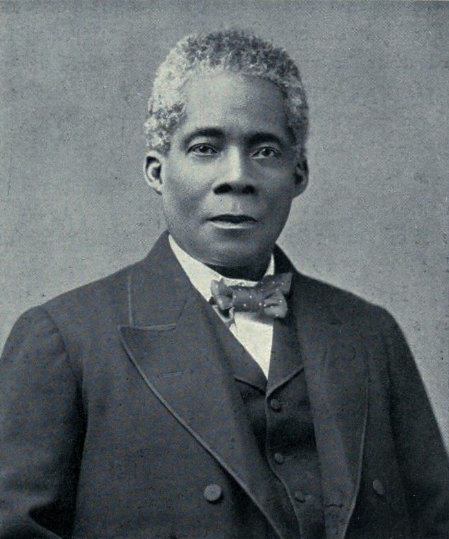
1851. Three American colleges refused him — not for his mind, but for his skin. He sailed to Liberia and built the intellectual foundation of Pan-Africanism instead.
Edward Wilmot Blyden was born in St. Thomas in the Danish West Indies, the child of a Caribbean diaspora. When he tried to study theology in the United States, every door closed on the basis of race. So he made a different calculation: he went to Liberia, mastered Arabic, Hebrew, Latin, and Greek, and spent the next 60 years building an argument the world had never seen — that Africa’s civilizations were not deficient versions of Europe’s. They were something distinct. Something worth protecting. Something to be proud of without permission.
In 1887, he published Christianity, Islam and the Negro Race. It was the first major intellectual framework arguing that African identity was complete on its own terms. Marcus Garvey read it. Kwame Nkrumah built on it. The entire Pan-African independence movement stands on the architecture Blyden laid.
Blyden’s approach was precise. He named the wound first — diagnosing colonialism not just as political oppression but as a psychological project designed to make Black people ashamed of their own minds and cultures. Then he used the colonizer’s tools against the framework: mastering Arabic, Hebrew, Latin, and Greek not to assimilate, but to prove on Western terms that African intellectual tradition needed no apology.
His concept of the “African Personality” gave Nkrumah, Garvey, and the entire independence movement a theoretical spine. He wrote the architecture, not just the argument.
“Africa may yet prove to be the spiritual conservatory of the world.” — Edward Wilmot Blyden, Christianity, Islam and the Negro Race, 1887
Blyden spent his life arguing that African identity needed no external permission. Bozoma Saint John lives that argument — building brands and breaking rooms in ways that never asked for permission.
Next week: Bozoma Saint John — bridging African culture and global tech.
What argument have you been waiting for permission to make?
Week 27 of 52 · Roots & Futures · Kodjoe Family Foundation