
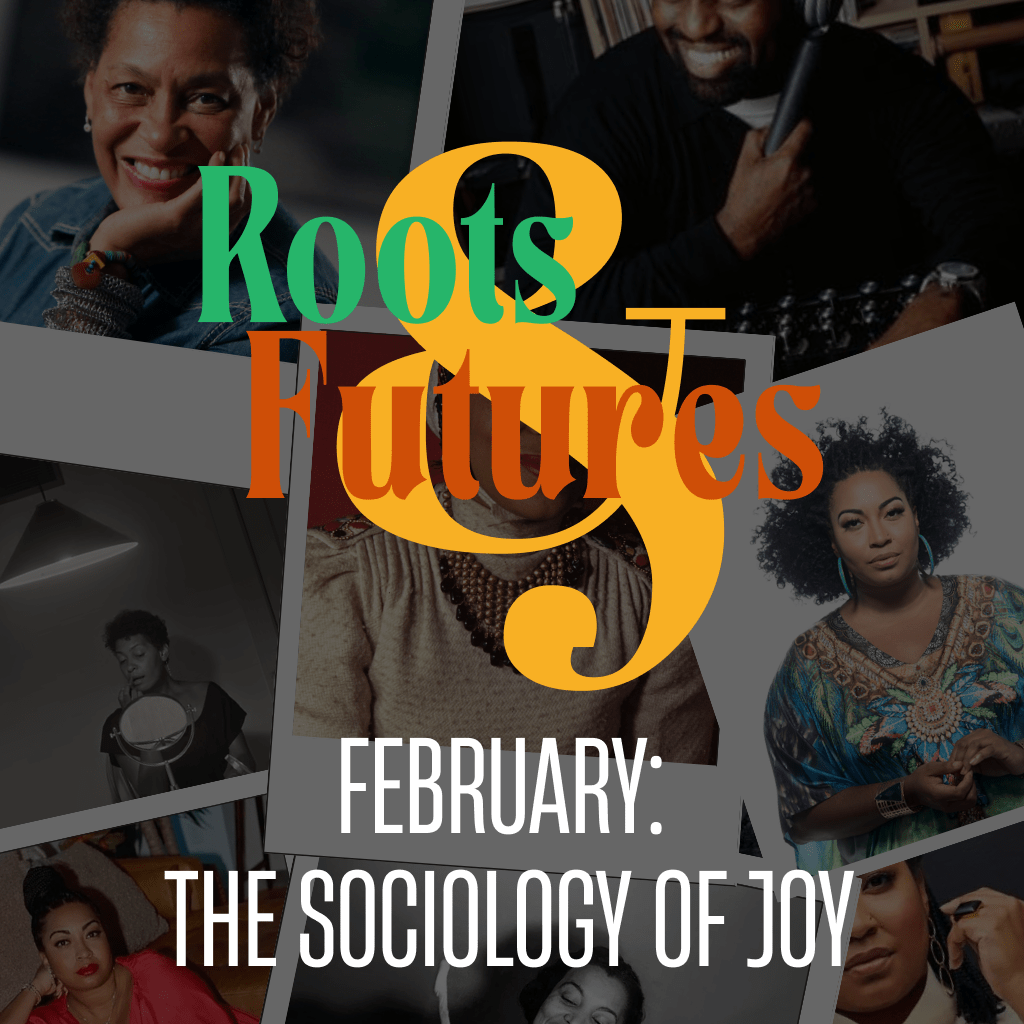
The second chapter of the Roots & Futures series, “The Sociology of Joy,” shifts our gaze from the structural archives of the mind to the vibrant, lived textures of the spirit. This month serves as a deep dive into how Black joy has never been a mere reaction to struggle, but a deliberate, sophisticated social science — a methodology of communal survival and self-actualization that persists across generations.
We begin with the “Roots” of this exploration in the work of Zora Neale Hurston. Beyond her literary acclaim, Hurston was a rigorous anthropologist who understood that the “folk” culture of the American South was a treasure trove of psychological resilience. This ethos of centering the domestic and the personal found its “Future” expression in Carrie Mae Weems’ The Kitchen Table Series, which transforms the most mundane setting into a stage for the profound.
As the month unfolded, we transitioned from the domestic to the communal, exploring the “Sonic Sanctuaries” built in the heat of the urban night. Frankie Knuckles, the “Godfather of House Music,” engineered a revolution in Chicago by blending disco, soul, and gospel into a new frequency — a sanctuary where the marginalized could find a collective euphoria that the outside world denied them. This legacy of curated well-being is carried into the modern day by Rachel Cargle, the “Architect of Ancestral Joy,” whose work reimagines joy as a form of social justice.
February reminds us that joy is a discipline. It is a social structure built with intention, rhythm, and love. By bridging the gap between the rural play-songs of the past and the digital communities of the present, “The Sociology of Joy” demonstrates that our laughter has always been our most potent form of liberation.