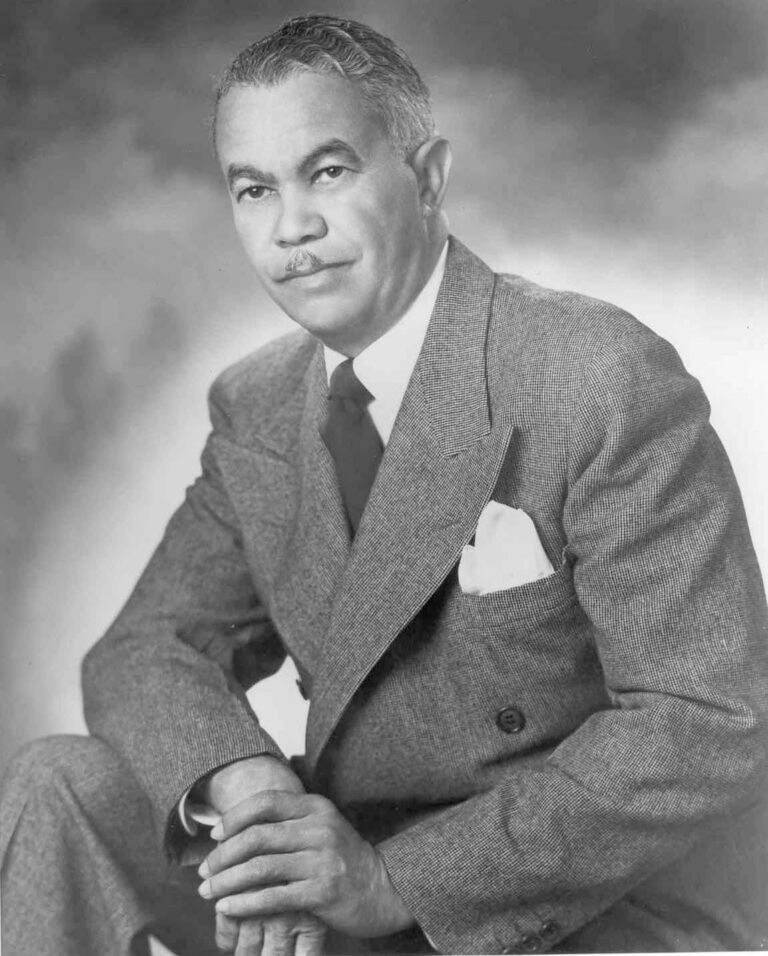

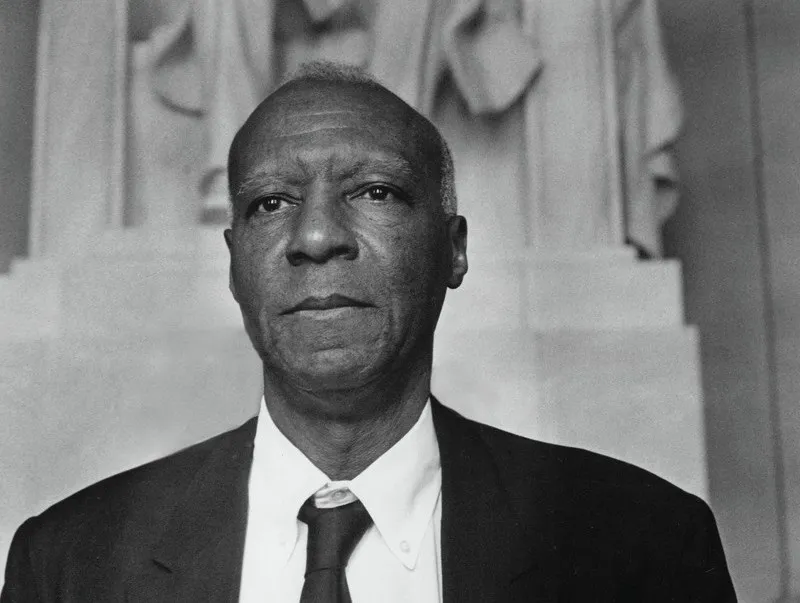
Randolph’s most monumental achievement was the founding of the Brotherhood of Sleeping Car Porters (BSCP). In the 1920s, the Pullman Company was the largest employer of Black men in America. These men, known as “Pullman Porters,” were symbols of prestige on the outside but faced grueling 400-hour months and meager pay on the inside. They were called “George” regardless of their names—a derogatory holdover from slavery. Randolph spent twelve years traveling the country in secret, meeting in basements and backrooms to convince these men that their labor was their leverage. When the BSCP finally forced the Pullman Company to the negotiating table in 1937, it wasn’t just a victory for wages; it was a victory for human dignity. It proved that Black workers could successfully challenge the most powerful corporate entity in the country.
However, Randolph’s vision was never confined to a single union. He saw labor as a bridge to universal rights. In 1941, as the world prepared for war, he saw an opportunity. He informed President Franklin D. Roosevelt that he would lead 100,000 Black protesters to the capital if the defense industry wasn’t desegregated. Roosevelt, fearing a massive public relations disaster, blinked first. The resulting Executive Order 8802 was the first significant federal action toward racial justice since Reconstruction.
A. Philip Randolph’s legacy is the blueprint for the modern protest. He taught a generation that “social peace” is a commodity that must be traded for social justice. He was the bridge between the radicalism of the early 20th century and the organized non-violence of the 1960s. When we speak today about the “power of the strike” or “economic boycotts,” we are speaking in the language that Randolph perfected. He proved that the philosopher of labor does not just think about work—he organizes the workers to stop the world until the world acknowledges their worth.
A. Philip Randolph’s life proves that economic leverage is the ultimate negotiator. He didn’t just ask for fairness; he engineered the collective power to demand it. By turning the “Pullman Porter” from a servant into a professional with a contract, he laid the groundwork for the modern Black middle class and taught us that our work is only as valuable as the power we use to protect it.