
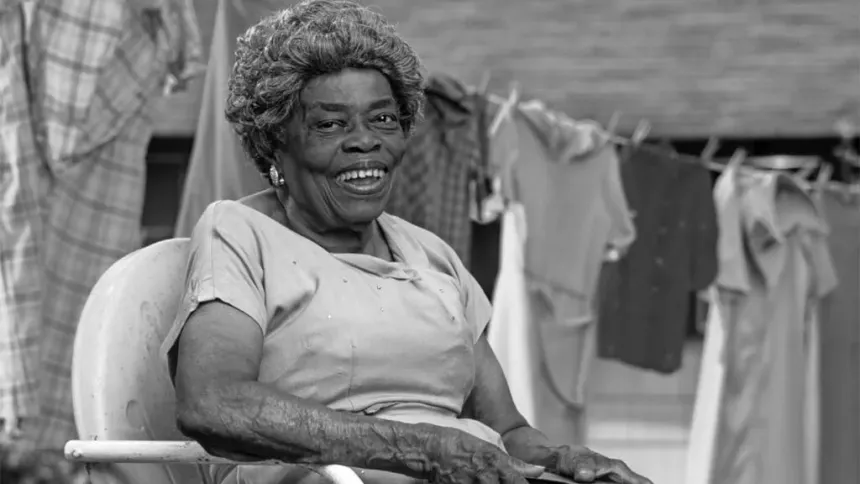
The image of Oseola McCarty is often painted in soft, sentimental strokes: an elderly woman in a simple house, surrounded by bundles of laundry. But to view her only through the lens of “charity” is to miss the radical, strategic brilliance of her life. Oseola McCarty was, in many ways, a master of long-term economic resistance. In a state like Mississippi, where systemic racism was designed to strip Black Americans of their labor and their capital, McCarty performed a quiet miracle: she kept both.
For nearly eight decades, McCarty operated a one-woman business. She was a meticulous bookkeeper of her own life. Because she lacked a formal education, she viewed her bank account as her “report card.” She understood the power of compound interest—not just in the financial sense, but in the moral sense. By living on a fraction of her earnings, she transformed her manual labor into a tool for social mobility that would outlive her.
When she walked into the University of Southern Mississippi’s development office in 1995, she didn’t just bring a check; she brought a challenge to the status quo. At the time, her gift was the largest ever made to the university by an African American. This was a profound political statement. She chose to give to an institution that, for most of her life, would have barred her from its classrooms. By creating a scholarship for students of color, she essentially “bought” a piece of the future, ensuring that the gates which were closed to her would be held wide open for others.
Her gift triggered a phenomenon that sociologists now study as the “McCarty Effect.” After her story went viral, hundreds of people—from local residents to billionaire Ted Turner—sent in donations to match her gift. She proved that authenticity is the most powerful marketing tool in philanthropy. People didn’t give because she was rich; they gave because she was real.
Oseola McCarty passed away in 1999, but her influence is felt every time a scholarship recipient walks across a graduation stage in Hattiesburg. Her life proves a specific truth: that courage is often quiet, and oppression can be defeated by the steady, rhythmic scrubbing of a washboard. She laid the groundwork for a modern understanding of “community wealth,” reminding us that the strength of a society is measured by how much we are willing to save for a child we will never meet.
Oseola McCarty’s life proves that dignity is found in the work, but power is found in the purpose. She lived through the Jim Crow era in Mississippi, a system designed to keep her invisible and impoverished. Instead, she used that system’s own currency to subvert it, becoming a benefactor to a university she could not have legally attended for much of her life. Her “voice” resonates today as a reminder that a life of service is not a small life, and that the greatest legacy is built by thinking beyond one’s own horizon.